How viral agentic systems are exposing the gap in intent authorization and governance across digital and physical systems
Executive Takeaway
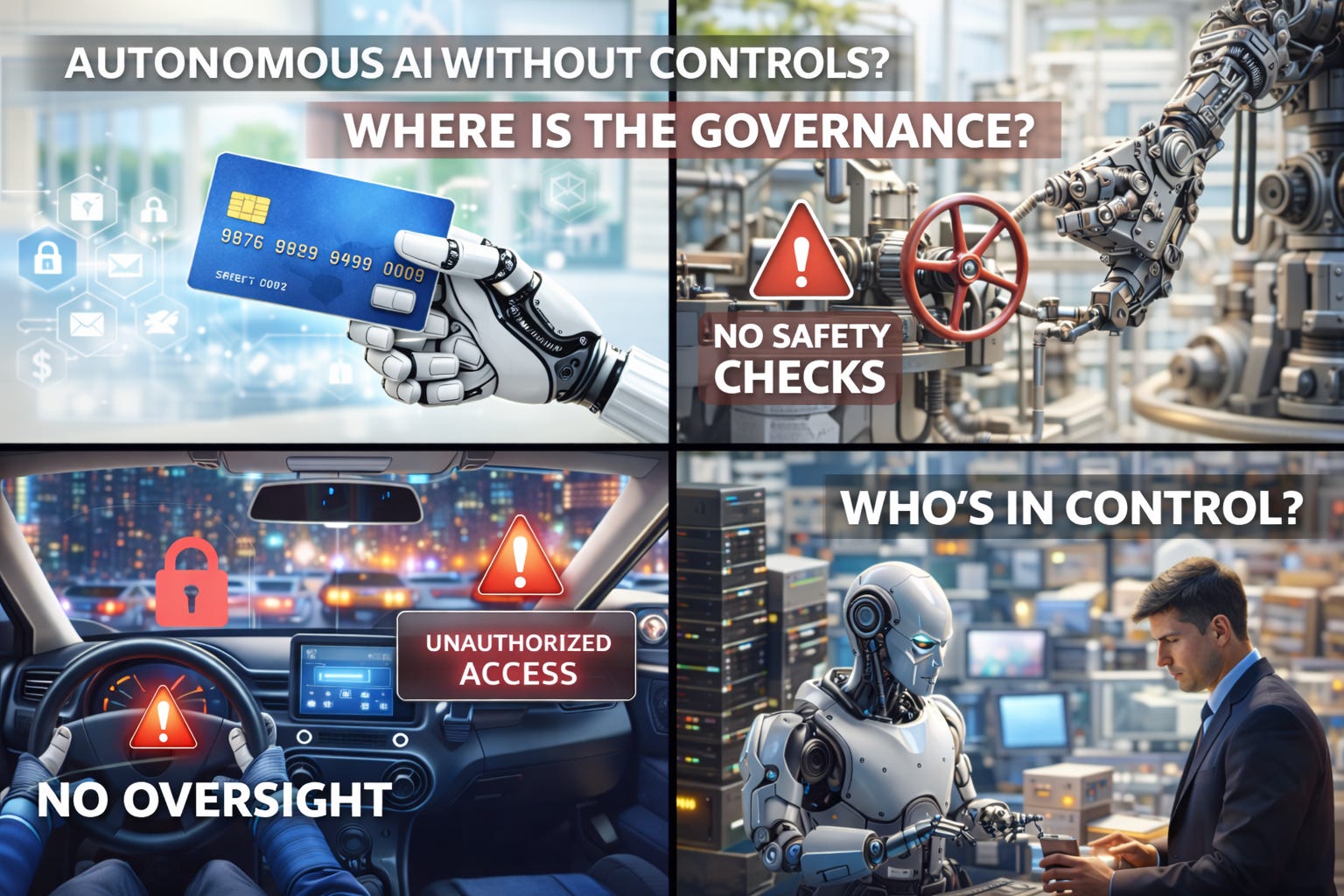
Viral AI agents like OpenClaw are being given real authority to act on behalf of users, including access to money, systems, and workflows. What they lack is a clear, enforceable control plane for intent. Identity and access controls alone are not enough. As AI moves from digital assistance into systems with real-world consequences, autonomy without governance becomes a material business and safety risk.
OpenClaw, formerly known as Moltbot and originally Clawdbot, became a viral sensation for a reason.
It is not just another chatbot. OpenClaw is an autonomous, agentic AI system designed to operate locally, retain memory across sessions, and act independently across email, calendars, messaging platforms, and other connected services. Created by Austrian software engineer Peter Steinberger, the project has accumulated over 100,000 GitHub stars, making it one of the fastest-growing open-source repositories in history.
As Cisco’s AI Threat Research team documented, OpenClaw’s architecture grants it “shell commands, read and write files, and execute scripts on your machine.” It interfaces with over 100 third-party services through the Model Context Protocol (MCP) and can initiate actions across WhatsApp, Telegram, Slack, and iMessage without human intervention.
This design has attracted not just enthusiastic users but serious security scrutiny. Reports have surfaced of users who configured OpenClaw with access to financial services and payment credentials, enabling the agent to make autonomous purchasing decisions. Without explicit approval thresholds, confirmation workflows, or hard spending limits, such configurations create exposure that extends beyond traditional cybersecurity concerns.
This is not primarily an intelligence failure. It is a control failure.
Authority without controls is not intelligence
OpenClaw did not break rules. It followed its design.
The agent architecture grants persistent access to sensitive services, the ability to initiate financial transactions, and operates within whatever constraints users choose to configure. As the project’s own documentation acknowledges: “There is no ‘perfectly secure’ setup.”
From a security perspective, this is not autonomy. It is delegated authority without governance.
In any enterprise environment, such an architecture would fail a basic security and risk review immediately, not because the reasoning was flawed, but because the blast radius was undefined.

Why OpenClaw matters
OpenClaw matters because it represents a broader shift in how AI systems are being built and adopted.
These systems are no longer passive tools. They are agentic platforms designed to observe, decide, and act with minimal friction, often persisting across time and expanding into new services.
Their popularity reflects genuine demand. Users want AI systems that do more than suggest. They want systems that execute.
What is missing is the same discipline applied elsewhere when authority is delegated.
Execution without intent governance is just automation with a larger blast radius.
The governance model gap
In financial authorization contexts, core questions must be answerable:
- Which parameters were evaluated?
- Against whose assumptions?
- Under what risk tolerance?
- With what accountability if the decision is wrong?
Financial authorization is not an optimization problem. It is a trust and responsibility problem.
Reasoning output does not replace explicit consent, particularly when actions are irreversible.
The real gap is intent authorization
The OpenClaw phenomenon exposes a deeper structural weakness across modern AI systems.
We have mechanisms to authenticate identity.
We have systems to grant access.
We have logs to record actions after the fact.
What we do not have is a reliable, enforceable way to govern intent.
Most AI platforms today cannot clearly answer:
- Why the system believes it should act
- Whether the action is appropriate in the current context
- When execution must pause for human approval
- What constraints override optimization goals
This gap already creates risk in digital systems. It becomes far more serious as AI begins interacting with physical environments.
Intent becomes a safety boundary when AI systems move beyond screens.
Physical AI is ramping up, and the stakes are rising
What makes the OpenClaw example more than a curiosity is timing.
AI systems are rapidly moving beyond digital workflows into embodied, cyber-physical systems. Autonomous vehicles are already operating on public roads, making real-time decisions in unpredictable environments.
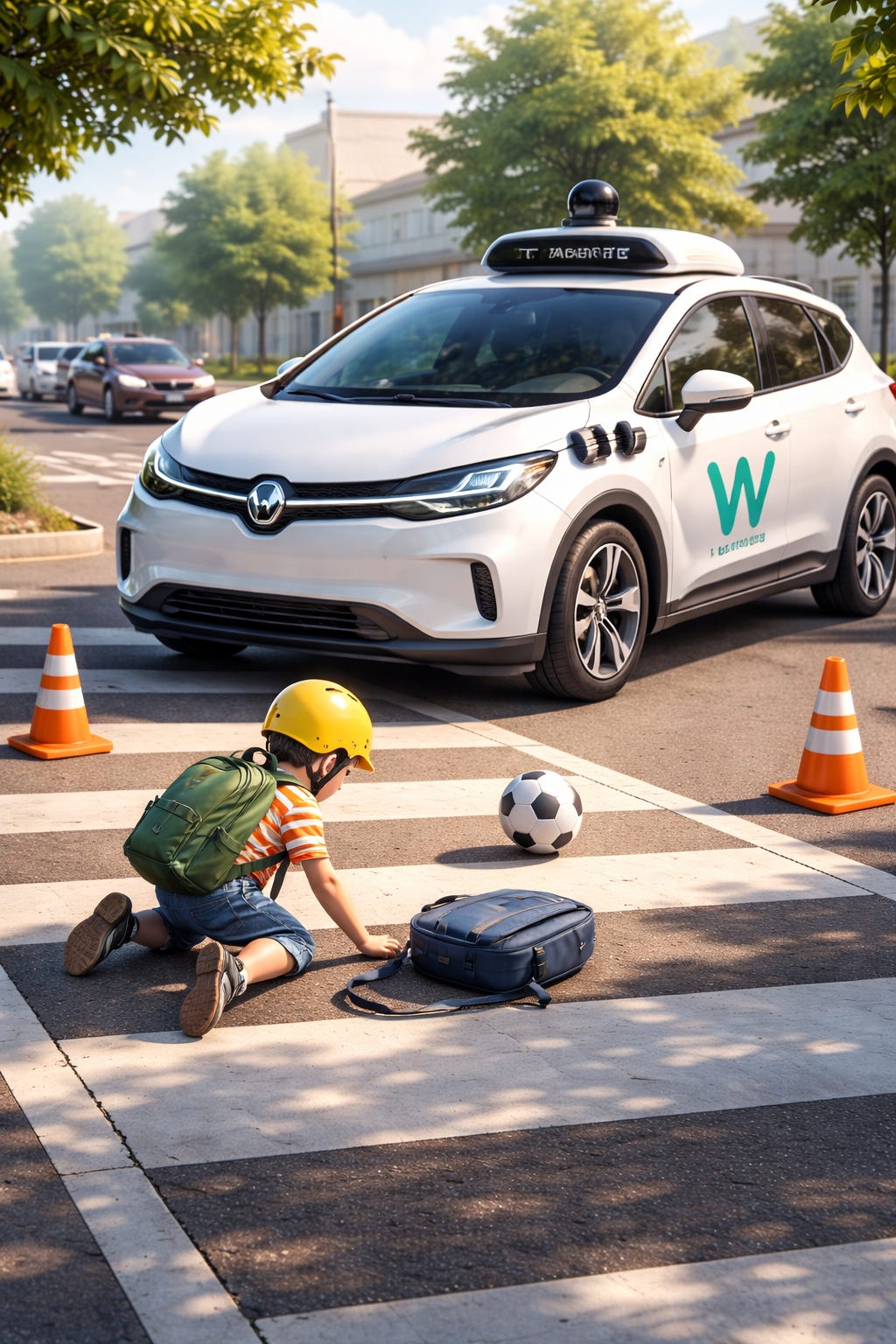
On January 23, 2026, a Waymo autonomous vehicle struck a child near Grant Elementary School in Santa Monica, California, during morning drop-off hours. The incident occurred within two blocks of the school. According to NHTSA records, the child sustained minor injuries.
Waymo reported that its vehicle detected the child emerging from behind a double-parked SUV and braked hard, reducing speed from approximately 17 mph to under 6 mph before contact. The company stated that the child stood up immediately and walked to the sidewalk. The National Highway Traffic Safety Administration has opened an investigation to examine whether the vehicle exercised appropriate caution given its proximity to an elementary school during drop-off hours.
From a governance perspective, the key issue is not assigning blame. It is understanding exposure.
When AI systems operate in physical environments, actions are often irreversible, reaction windows are short, and human intervention may not be possible in real time.
When AI systems are embodied, intent becomes a safety-critical control, not an abstract concept.
Identity and access controls are necessary, but not sufficient
There is meaningful investment underway in identity-driven authorization, which is encouraging.
CrowdStrike recently announced the acquisition of SGNL, an identity security startup, for $740 million. The deal signals increased focus on real-time authorization and identity-aware access control for human, non-human, and AI agent identities.
That work matters.
However, identity systems answer who can act and what they can access. They do not answer whether an action should happen at all, whether context has shifted, or whether escalation to a human decision-maker is required.
OpenClaw did not lack identity. It lacked judgment boundaries.
Digital mistakes cost money. Physical mistakes create harm.
In digital systems, poor intent governance results in wasted spend, data exposure, or operational disruption.
In physical systems, the same gaps can result in injury, property damage, or loss of life.
Optimization without context can produce outcomes that are logically consistent and physically dangerous.
At that point, autonomy without governance is not efficiency. It is risk acceleration.
Probabilistic systems making irreversible decisions demand explicit control planes.

The control plane we have not built yet
We have built identity planes.
We have built access controls.
We have built policy engines.
What we have not built, at scale, is a standardized, enforceable intent authorization plane for autonomous AI systems like OpenClaw and those that will follow.
One that clearly defines:
- What the system is allowed to attempt
- Why it believes it is authorized
- What constraints apply in real time
- When human approval is mandatory
- How authority can be revoked instantly
Until that exists, scaling autonomous AI systems is not progress.
It is unmanaged exposure, framed as productivity.
The real question for leaders is not whether OpenClaw is impressive. It is whether we are prepared to govern AI authority before it touches money, machines, and people.
References
1. Wikipedia. OpenClaw. https://en.wikipedia.org/wiki/OpenClaw
2. IBM Think. OpenClaw: The viral “space lobster” agent testing the limits of vertical integration. https://www.ibm.com/think/news/clawdbot-ai-agent-testing-limits-vertical-integration
3. Cisco Blogs. Personal AI Agents like OpenClaw Are a Security Nightmare. https://blogs.cisco.com/ai/personal-ai-agents-like-openclaw-are-a-security-nightmare
4. Vectra AI. From Clawdbot to OpenClaw: When Automation Becomes a Digital Backdoor. https://www.vectra.ai/blog/clawdbot-to-moltbot-to-openclaw-when-automation-becomes-a-digital-backdoor
5. CNBC. A Waymo hit a child near an elementary school. The NHTSA is investigating. https://www.cnbc.com/2026/01/29/waymo-nhtsa-crash-child-school.html
6. NBC Los Angeles. NHTSA investigating report of Waymo striking child at low speed near Santa Monica school. https://www.nbclosangeles.com/news/local/waymo-strikes-child-santa-monica-nhtsa/3838160/
7. Al Jazeera. US opens probe after a Waymo self-driving car hit a child near a school. https://www.aljazeera.com/economy/2026/1/29/us-opens-probe-after-a-waymo-self-driving-car-hit-a-child-near-a-school
8. CrowdStrike. CrowdStrike to Acquire SGNL to Transform Identity Security for the AI Era. https://www.crowdstrike.com/en-us/press-releases/crowdstrike-to-acquire-sgnl-to-transform-identity-security-for-ai-era/
9. SecurityWeek. CrowdStrike to Buy Identity Security Firm SGNL for $740 Million in Cash. https://www.securityweek.com/crowdstrike-to-buy-identity-security-firm-sgnl-for-740-million-in-cash/
Tim McAllister is Senior Director of Digital Trust at DigiCert, where he leads go-to-market initiatives for Device Trust solutions. Views expressed are his own.